Trojan:MSIL/Stelega.DN!MTB

Rachel Ross
Updated on April 23, 2026
Trojan:MSIL/Stelega.DN!MTB detection is a malware detection you can spectate in your system. It often appears after the preliminary actions on your PC – opening the dubious email messages, clicking the advertisement in the Web or mounting the program from unreliable resources. From the moment it appears, you have a short time to take action until it begins its harmful activity. And be sure – it is much better not to wait for these harmful actions.
What is Trojan:MSIL/Stelega.DN!MTB virus?
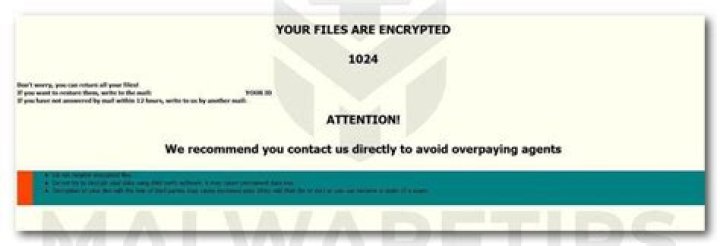
Trojan:MSIL/Stelega.DN!MTB is ransomware-type malware. It looks for the documents on your disk, encrypts it, and after that asks you to pay the ransom for getting the decryption key. Besides making your documents locked, this virus also does a ton of damage to your system. It modifies the networking settings in order to stop you from checking out the removal articles or downloading the anti-malware program. In some cases, Trojan:MSIL/Stelega.DN!MTB can also stop the setup of anti-malware programs.
Trojan:MSIL/Stelega.DN!MTB Summary
In summary, Trojan:MSIL/Stelega.DN!MTB virus actions in the infected PC are next:
- SetUnhandledExceptionFilter detected (possible anti-debug);
- Executed a command line with /C or /R argument to terminate command shell on completion which can be used to hide execution;
- Dynamic (imported) function loading detected;
- Reads data out of its own binary image;
- A process created a hidden window;
- CAPE extracted potentially suspicious content;
- Drops a binary and executes it;
- The binary contains an unknown PE section name indicative of packing;
- Authenticode signature is invalid;
- A scripting utility was executed;
- Uses Windows utilities for basic functionality;
- Uses Windows utilities for basic functionality;
- A script process created a new process;
- Attempts to interact with an Alternate Data Stream (ADS);
- Ciphering the files located on the victim’s disk — so the victim cannot use these documents;
- Blocking the launching of .exe files of anti-malware programs
- Blocking the launching of installation files of security tools
Ransomware has been a horror story for the last 4 years. It is difficult to imagine a more dangerous virus for both individuals and businesses. The algorithms utilized in Trojan:MSIL/Stelega.DN!MTB (generally, RHA-1028 or AES-256) are not hackable – with minor exclusions. To hack it with a brute force, you need more time than our galaxy already exists, and possibly will exist. However, that malware does not do all these horrible things without delay – it can require up to several hours to cipher all of your files. Therefore, seeing the Trojan:MSIL/Stelega.DN!MTB detection is a clear signal that you must start the elimination process.
Where did I get the Trojan:MSIL/Stelega.DN!MTB?
Ordinary ways of Trojan:MSIL/Stelega.DN!MTB spreading are usual for all other ransomware variants. Those are one-day landing web pages where users are offered to download the free app, so-called bait e-mails and hacktools. Bait e-mails are a relatively modern tactic in malware distribution – you receive the e-mail that imitates some standard notifications about shippings or bank service conditions changes. Inside of the email, there is a corrupted MS Office file, or a web link which leads to the exploit landing site.
Malicious email message. This one tricks you to open the phishing website.
Avoiding it looks quite uncomplicated, however, still requires a lot of awareness. Malware can hide in various spots, and it is far better to prevent it even before it invades your system than to trust in an anti-malware program. Standard cybersecurity awareness is just an important thing in the modern-day world, even if your interaction with a computer remains on YouTube videos. That can keep you a great deal of time and money which you would spend while looking for a fixing guide.
Trojan:MSIL/Stelega.DN!MTB malware technical details
File Info:
name: 4D1DD65A0DA2084543F1.mlwpath: /opt/CAPEv2/storage/binaries/edc40f72b1b738f79d8d7f051c34156d16113415422f5be2f7092ef5b3711c83crc32: 5D6FC651md5: 4d1dd65a0da2084543f1a87fa91bcd8fsha1: 6ff748ce9477f8ce45e87b654fbc5772a12d9166sha256: edc40f72b1b738f79d8d7f051c34156d16113415422f5be2f7092ef5b3711c83sha512: 1a905080b0d5169d326a6310ea6d8b9f47f2fb71c19114850e937dca8281795df3414359d08df9ee25f3c31a77c147c2676812f3515439793d8ea3f3523449e1ssdeep: 24576:Y2G/nvxW3Wnka6g6TlS47MeRrffN8iO0vELw+4q:YbA31JlSmf18J3LThtype: PE32 executable (GUI) Intel 80386, for MS Windowstlsh: T114555B017A44CD12D269163BC9EF849447B8FD016A6ACB1B7EEE379E38513A70E0D5CBsha3_384: b39ca94f68d74fc0381c7eaa2475fa6273423bdd2eb7882d99df41892b36f3a97d3512cae7096dd27e91d217c292ad07ep_bytes: e874040000e988feffff3b0d68e64300timestamp: 2020-12-01 18:00:55Version Info:
0: [No Data]
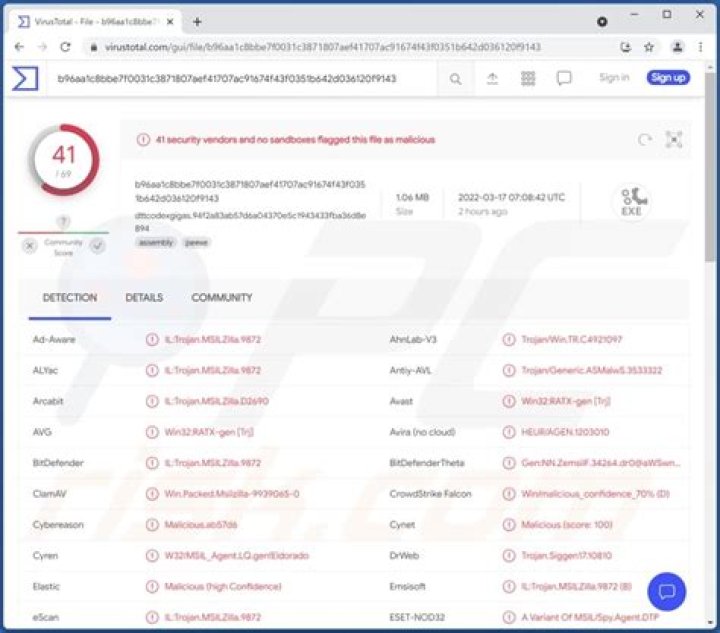
Trojan:MSIL/Stelega.DN!MTB also known as:
| Bkav | W32.AIDetect.malware2 |
| Lionic | Trojan.Win32.Makop.trQA |
| Elastic | malicious (high confidence) |
| MicroWorld-eScan | IL:Trojan.MSILZilla.9872 |
| FireEye | Generic.mg.4d1dd65a0da20845 |
| McAfee | Artemis!4D1DD65A0DA2 |
| Cylance | Unsafe |
| Sangfor | Suspicious.Win32.Save.a |
| K7AntiVirus | Trojan ( 0056e5201 ) |
| BitDefender | IL:Trojan.MSILZilla.9872 |
| K7GW | Trojan ( 0056e5201 ) |
| Cybereason | malicious.a0da20 |
| BitDefenderTheta | Gen:NN.ZemsilF.34114.8q0@aaCKzlb |
| Cyren | W32/MSIL_Agent.LQ.gen!Eldorado |
| Symantec | Trojan.Gen.MBT |
| ESET-NOD32 | multiple detections |
| TrendMicro-HouseCall | TROJ_GEN.R002C0DL821 |
| Paloalto | generic.ml |
| ClamAV | Win.Malware.Uztuby-9848412-0 |
| Kaspersky | UDS:Trojan-PSW.MSIL.Stealer.gen |
| Alibaba | TrojanPSW:MSIL/Stelega.e5ed2df9 |
| ViRobot | Trojan.Win32.Z.Uztuby.1307870 |
| Ad-Aware | IL:Trojan.MSILZilla.9872 |
| Sophos | Mal/Generic-R |
| DrWeb | BackDoor.QuasarNET.5 |
| TrendMicro | TROJ_GEN.R002C0DL821 |
| McAfee-GW-Edition | BehavesLike.Win32.Generic.th |
| SentinelOne | Static AI – Malicious SFX |
| Emsisoft | IL:Trojan.MSILZilla.9872 (B) |
| APEX | Malicious |
| Avira | TR/Spy.Agent.sphhw |
| MAX | malware (ai score=81) |
| Antiy-AVL | Trojan/Generic.ASMalwS.34E7065 |
| Microsoft | Trojan:MSIL/Stelega.DN!MTB |
| GData | Win32.Trojan.BSE.1CL7UZW |
| AhnLab-V3 | Trojan/Win.TR.C4826947 |
| VBA32 | TrojanPSW.MSIL.Stealer |
| Malwarebytes | Malware.AI.1733936595 |
| Panda | Trj/CI.A |
| Tencent | Msil.Trojan-qqpass.Qqrob.Pdcv |
| Yandex | TrojanSpy.Agent!hBaJeXzOjvI |
| Ikarus | Trojan.MSIL.Spy |
| Fortinet | MSIL/Agent.DEK!tr.spy |
| AVG | Win32:RansomX-gen [Ransom] |
| Avast | Win32:RansomX-gen [Ransom] |
| CrowdStrike | win/malicious_confidence_60% (W) |
How to remove Trojan:MSIL/Stelega.DN!MTB?
Trojan:MSIL/Stelega.DN!MTB malware is extremely hard to remove manually. It puts its data in multiple locations throughout the disk, and can recover itself from one of the elements. Additionally, various modifications in the registry, networking configurations and also Group Policies are really hard to identify and change to the original. It is better to make use of a special program – exactly, an anti-malware tool. GridinSoft Anti-Malware will definitely fit the best for virus elimination goals.
Why GridinSoft Anti-Malware? It is very light-weight and has its detection databases updated nearly every hour. In addition, it does not have such problems and vulnerabilities as Microsoft Defender does. The combination of these aspects makes GridinSoft Anti-Malware ideal for taking out malware of any form.
Download GridinSoft Anti-MalwareRemove the viruses with GridinSoft Anti-Malware
- Download and install GridinSoft Anti-Malware. After the installation, you will be offered to perform the Standard Scan. Approve this action.
- Standard scan checks the logical disk where the system files are stored, together with the files of programs you have already installed. The scan lasts up to 6 minutes.
- When the scan is over, you may choose the action for each detected virus. For all files of [SHORT_NAME] the default option is “Delete”. Press “Apply” to finish the malware removal.