How to Fix a Hacked Computer? 🖥️ What To Do?

Matthew Alvarez
Updated on March 02, 2026
Unfortunately, computer hacking is common these days.
It is better to prevent, than repair and repent!
These days computer hacks areas are shared as weather changes. Today feels sunny and safe, but tomorrow could be completely different. Luckily, Gridinsoft is here to safeguard your computer against all types of digital threats. It's a unique fusion of protection software and human intelligence on-demand, 24/7. So download Gridinsoft Anti-malware and make sure your digital life is safe.EULA | Privacy Policy | Gridinsoft
So, if you’ve been hacked, you’re not alone. But, unfortunately, being the victim of a computer hack is – at best – awfully inconvenient. So, here are the steps to minimizing that damage.
Firstly, let’s look at signs that you might have been hacked…
Signs your computer has been hacked
If your computer is hacked, you might notice some of the following symptoms:
- Google searches are redirecting to sites you didn’t intend to visit. Products within this classification are considered to be PUAs (Potentially Unwanted Applications), as they usually infiltrate browsers/systems without user permission. While redirects to google.com may seem as something innocuous, especially if it is users’ preferred search engine, browser hijackers are infamous for their data tracking abilities.
- Programs show up you didn’t install. A malicious program may be disguised as legitimate software to slip into your computer. Usually, it is done by worms or malware that attach to other software to get installed together as a bundle. So, if you notice an unknown program residing on your system, it’s likely a malicious one.
- Antivirus shutting down. Some types of malware disable your antivirus or anti-malware programs and make it difficult to re-enable them. If you notice that your antivirus has suddenly stopped working and you can’t open the Task Manager properly, it is very likely that your system has been infected with malware;
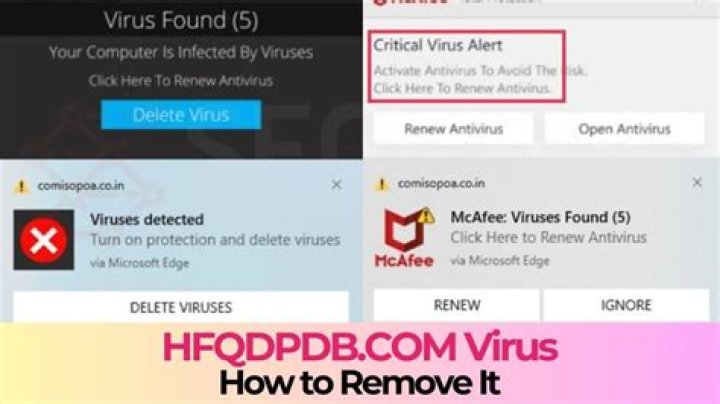
- You see suspicious pop-up ads, such as antivirus warnings, or suspicious downloads. This is one of the most explicit indications of a computer being infected. If you start seeing more annoying pop-ups in your web browser, and they often flash in sites that usually don’t generate pop-ups, this is a bad sign.
- People on your email contact lists receive spam that you didn’t send. If a virus has compromised your email, it might be trying to spread further by sending malicious emails to your contacts. It doesn’t automatically mean that your computer has been hacked. However, if the fake email includes your name and email address, it is likely that your system has been infected.
- Your computer slows down or freezes.
You notice rogue, third-party activity ranging from the minimal (keyboard strokes, your mouse moving) to the very big (money taken from your online bank or credit card account).
Reasons why you were hacked in the first place.
For safer browsing, you should:
- Avoid opening suspicious email attachments;
- Make sure your operating system (OS) is up to date: you’ll be regularly informed of your phone or computer updates. Please don’t put off installing these updates as they help keep your device’s security current;
- Use strong passwords, including numbers, letters, and punctuation – and not your mother’s maiden name! (We have a guide to creating more secure passwords if you’d like to know more.)
- For more on safe browsing, check out malware guide.
I have been hacked! How do I fix it?
And secondly, you can probably mitigate anything terrible that has occurred.
Here’s what to do…
Reset your passwords
This might seem onerous at first – you have a lot of passwords after all! But focus on the key places; social networks (Facebook, Twitter, Instagram), emails, devices (phone, laptop, and so on), and anywhere involving credit cards and finance (shopping, banking).
Log out of all online accounts
After you’ve reset passwords, log out. It’s easy to forget that we tend to have our social media (and other online accounts) set to log us in automatically.
Disconnect from the internet
Next, shut down contact to the internet: that means turning off Wi-Fi on your computer and switching phones and tablets to airplane mode.
Remove external hard drives
Remove any external drives. This means USB sticks or external hard drives. Be sure to “eject” them first. (Go to the appropriate folder, then click “eject”).
Scan your computer for malware and viruses
This can be done with your own devices’ security software or with third-party security. For more information on running a scan, check out our guide to getting rid of viruses.
Wipe your hard drive (if necessary)
If your scan reveals a virus or hack, you can (and probably should) wipe your hard drive, then reinstall your OS. Brushing means to erase permanently, so be aware that whatever you’re deleting will be gone for good unless you back it up.
Spread the word
Unfortunately, your hack might have affected people in your contact list: friends and families might have been emailed by a hacker posing as you. If that happens, it’s important to contact those who have been emailed or texted to let them know you weren’t behind the message and may have been hacked.
Closely monitor your credit and financial accounts
After the hack, keep an eye on your online expenditures, regularly checking your bank and credit card accounts.
Install security software
Naturally, up-to-date, reputable security software is the best line of defense against a future hack.
How to avoid being targeted by computer hackers again
Step 1: Read up on how to detect online scams
Sadly, hackers are always looking for ways to breach security. So it’s a good idea to keep on top of unwelcome trends related to hacking, phishing, and other forms of attack.
Step 2: Maintain strong passwords
Remember to keep strong passwords and to change them regularly. For example, include a combination of numbers, letters, and punctuation and try to use different passwords for your various online accounts.
Step 3: Don’t leave your devices unattended in public
Even two minutes is enough for a hacker to gain personal information or sow the seeds for a later hack.
Step 4: Keep files backed up
It’s good practice to maintain essential or sensitive files beyond your computer, ideally in multiple places, USB, external hard drives, cloud storage, or if you’re feeling especially cautious, all of the above.
Step 5: Ensure your firewall is configured correctly
You should have a firewall installed on your computer. A firewall in a building is a sealed wall that prevents the spread of fire. On your computer, it works the same way.
You can configure your firewall to block communication between your computer server and another. This firewall block could filter based on suspicious IP addresses (other specific servers), potentially dangerous phrases, or websites.
We have several articles about safer online activity, covering everything from getting rid of a computer virus to a comprehensive guide to malware.
It is better to prevent, than repair and repent!
When we talk about the intrusion of unfamiliar programs into your computer’s work, the proverb “Forewarned is forearmed” describes the situation as accurately as possible. Gridinsoft Anti-Malware is exactly the tool that is always useful to have in your armory: fast, efficient, up-to-date. It is appropriate to use it as an emergency help at the slightest suspicion of infection.EULA | Privacy Policy | Gridinsoft